Assessing and predicting land degradation processes using an improved multi-dimension framework based on remote sensing and machine learning approach
August 31, 2026
Kongming Li, Qi Wang, Bin Sun, Yunting Xiong, Jingjing Yuan, Yonglong Lu*
Environmental Impact Assessment Review
https://doi.org/10.1016/j.eiar.2026.108512
Published: 16 May 2026
Abstract
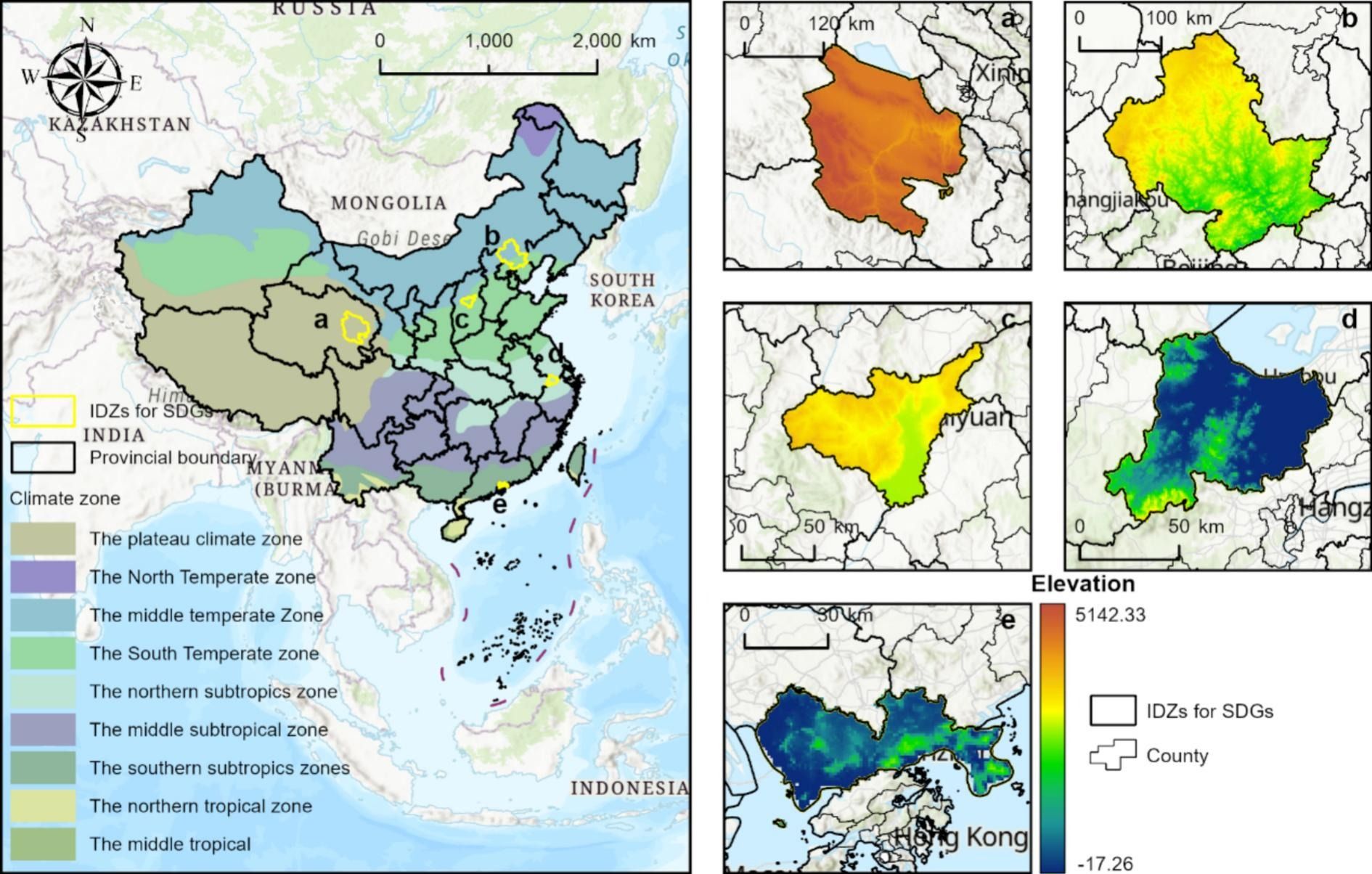
Land degradation poses significant challenges to sustainable developments goals (SDGs) across the globe. However, the comprehensive assessment and prediction framework for land degradation remain limited. In this study, we applied an improved framework based on remote sensing technique and machine learning method to assess and predict land degradation processes. Taking five Innovation Driven Demonstration Zones for the Delivery of Sustainable Development Goals in China (IDZs for SDGs) as the case study areas, we quantified historical land degradation and restoration processes by integrating indicators of landscape, productivity, and soil degradation, and subsequently projected future dynamics using random forest (RF) models. We found that the study areas experienced notable land degradation and restoration processes during 2000–2020. Taiyuan City experienced significant land recovery (47.5% of total area), while extensive degradation was mainly found in Huzhou City (38.4% the total area). Landscape degradation accounted for the majority of the total degraded area (4.8%), while increasing vegetation productivity was the primary form of land restoration (16.2%). Most areas (80%) that were degraded during the first period (2000−2010) either showed signs of recovery or remained stable in the second period (2010−2020). Land degradation also showed differences in the spatial distributions and quantities in response to future climate and socioeconomic changes under different SSP-RCP scenarios, which was estimated using the robust random forest model. This study makes a methodological contribution by developing a unified framework that links multi-dimensional land degradation assessment with scenario prediction, allowing historical land degradation, restoration processes, and future dynamics to be evaluated.