Bromate Electroreduction on NiO/Ni Foam: Overlooked Role of 'Reef-Sea' Synergetic Catalytic Mechanism
May 7, 2026
Tianqi Ji , Yue Cheng , Huihuan Lian , Junjie Li , Zhipeng Luo , Feiping Zhao , Ke Xiao , Huabin Zeng
Journal of Environmental Sciences
https://doi.org/10.1016/j.jes.2026.04.055
Published: 30 April 2026
Abstract
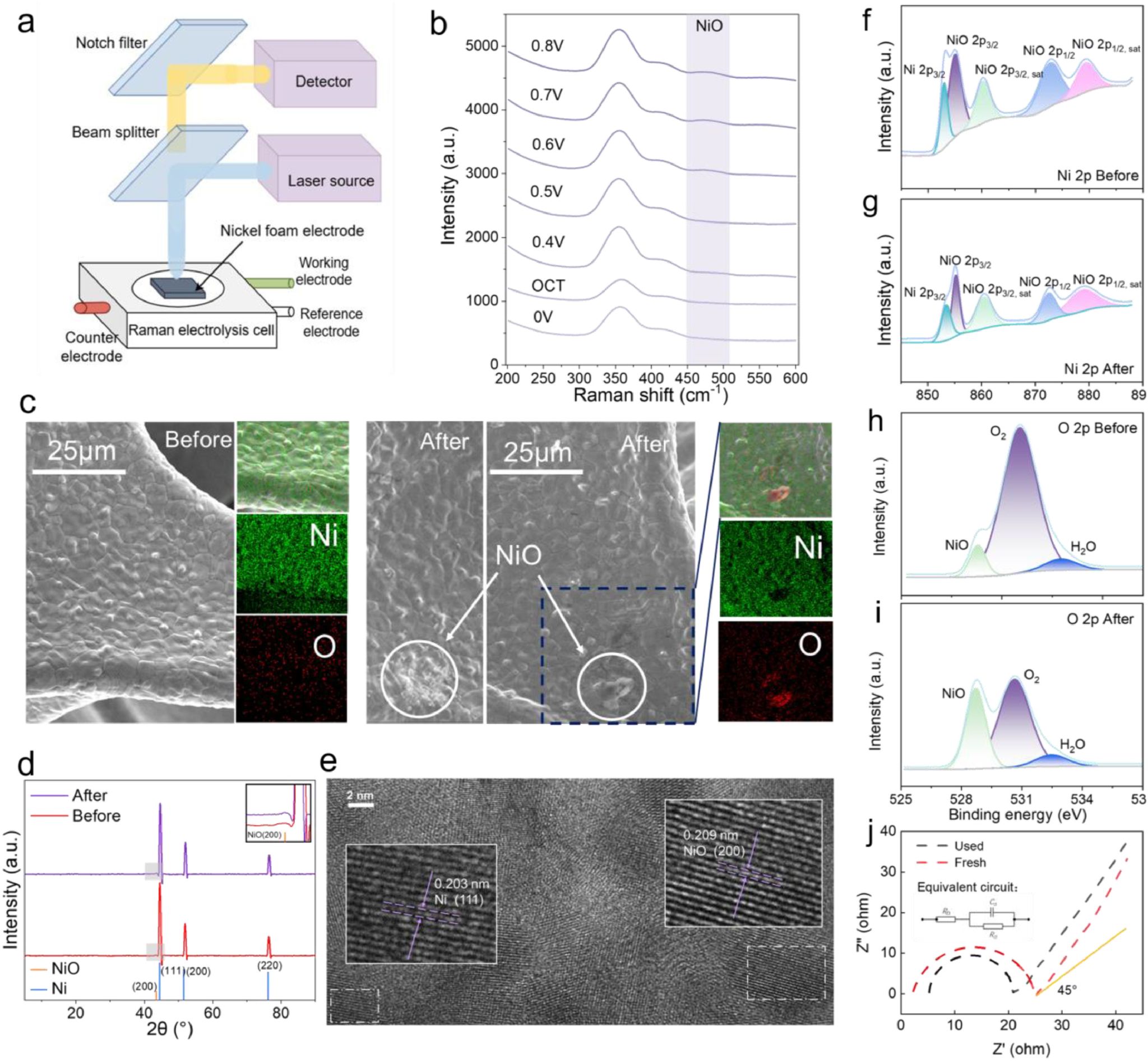
With the spreading use of ozone disinfection, bromate (BrO3-) has attracted public concern as a carcinogenic by-product. While its electroreduction over metal oxides/hydroxides was believed to only occur on the single-phase surface, leaving the consecutive multi-site deoxygenation pathway largely unexplored. Herein, during cathodic polarization under an O2-containing atmosphere, the Ni foam substrate underwent surface oxidation, yielding a heterogeneous mosaic in which NiO nanocrystalline “reefs” were randomly embedded within the metallic Ni “sea”. The architecture exhibits exceptional activity for BrO3- reduction, achieving 91.1 % removal within 30 min and retaining > 90 % efficiency over 10 consecutive cycles. Density functional theory calculations reveal that metallic Ni domains preferentially activate BrO3- via rapid electron transfer and initial deoxygenation, whereas NiO domains stabilize BrO2-/BrO- intermediates and promote their subsequent deep reduction to Br-. The synergistic alignment of electronic structures across the Ni/NiO boundary lowers the overall activation barrier from 0.58 eV on bare Ni to 0.07 eV, enabling a consecutive multi-site deoxygenation pathway that outperforms single-phase catalysts. Coupling the system with an upstream resin adsorption circumvented the limitations inherent to low concentrations of BrO3- and electrolyte, markedly reinforcing the practical applicability. These findings underscore the hitherto-overlooked role of emergent heterointerfaces in Ni-based electrodes and provide design principles for scalable, low-cost electrocatalysts in water treatment.